The most consequential research about our planet often stays locked inside the institutions that produce it. Taylor Geospatial was built to set it free.
Geospatial intelligence has quietly become one of the most important industries on Earth, shaping how the world’s largest companies forecast risk, how governments respond to crises, and how the global food system stays ahead of climate change. The opening of the NGA’s new $1.7 billion campus in North St. Louis in 2025 capped more than a decade of work by regional leaders building the case that the city should be where that work happens.
Taylor Geospatial was formed through the merger of two complementary organizations to turn GeoAI research into tools the public can actually use. Satellites generate staggering volumes of Earth observation data every day, but most of that data’s potential goes unrealized, locked behind the gap between academic research and real-world deployment. Taylor Geospatial closes that gap, unifying experts in academia, industry, and technology to translate promising research into open datasets, models, and digital public goods.
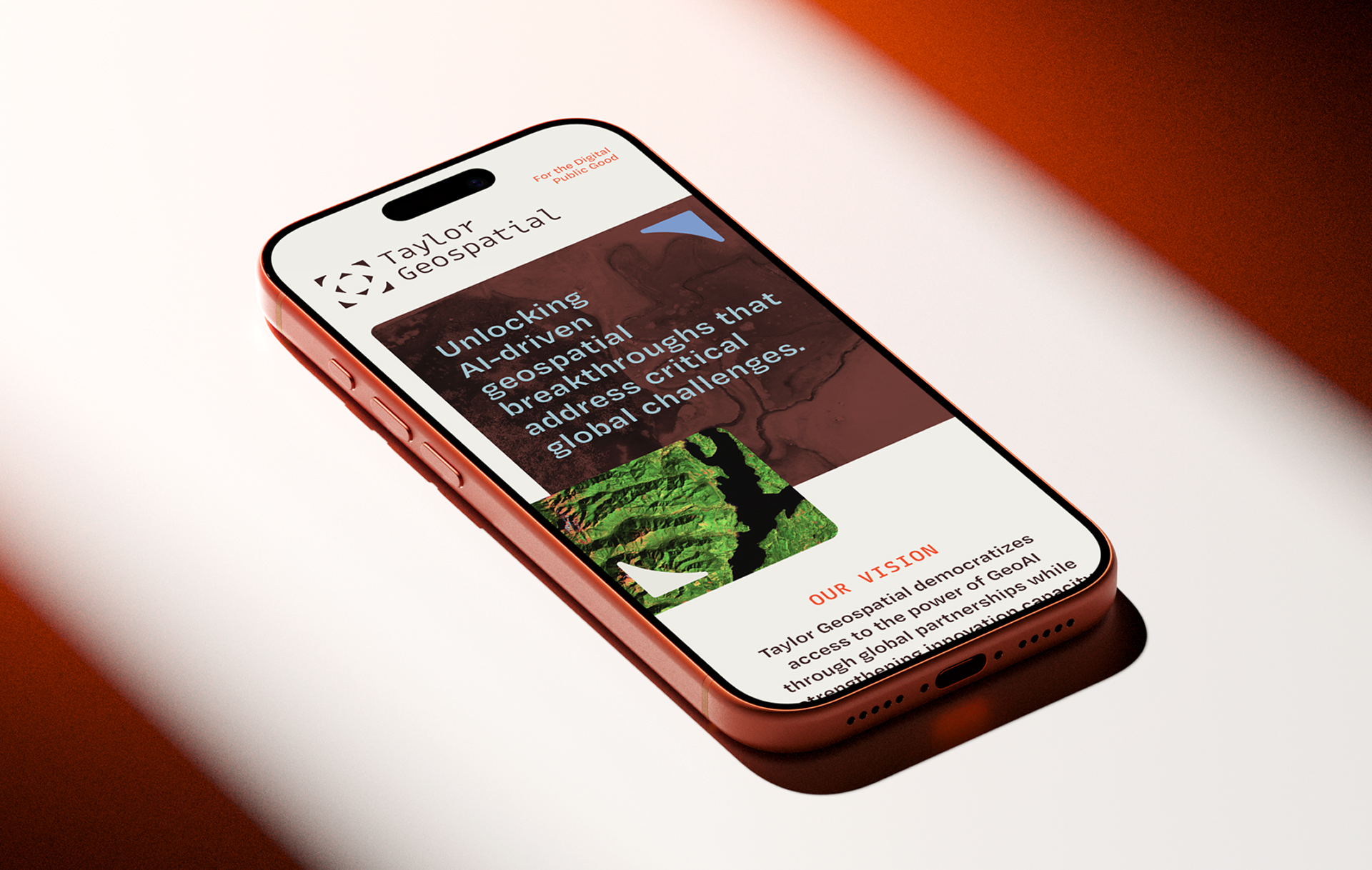
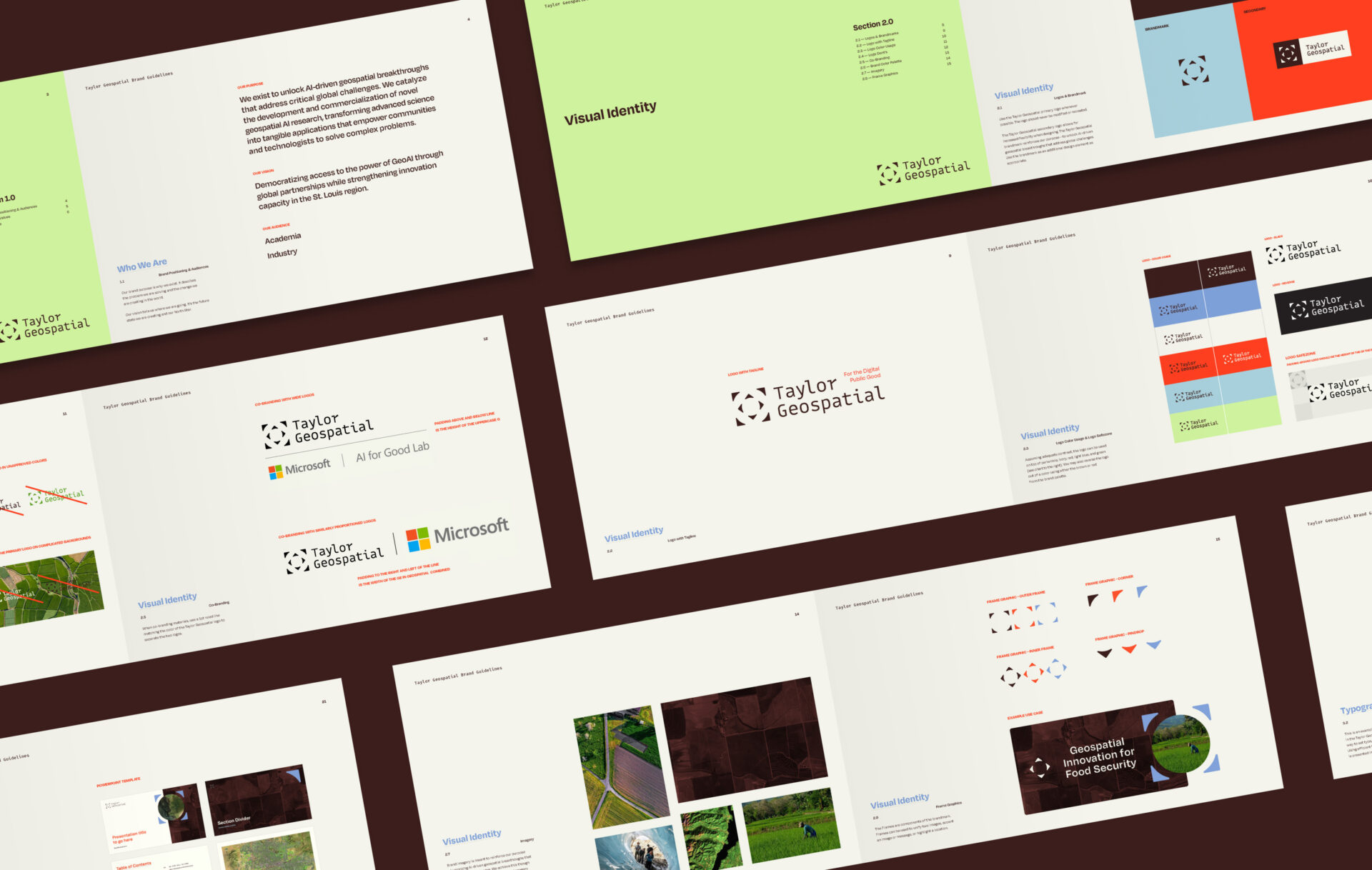
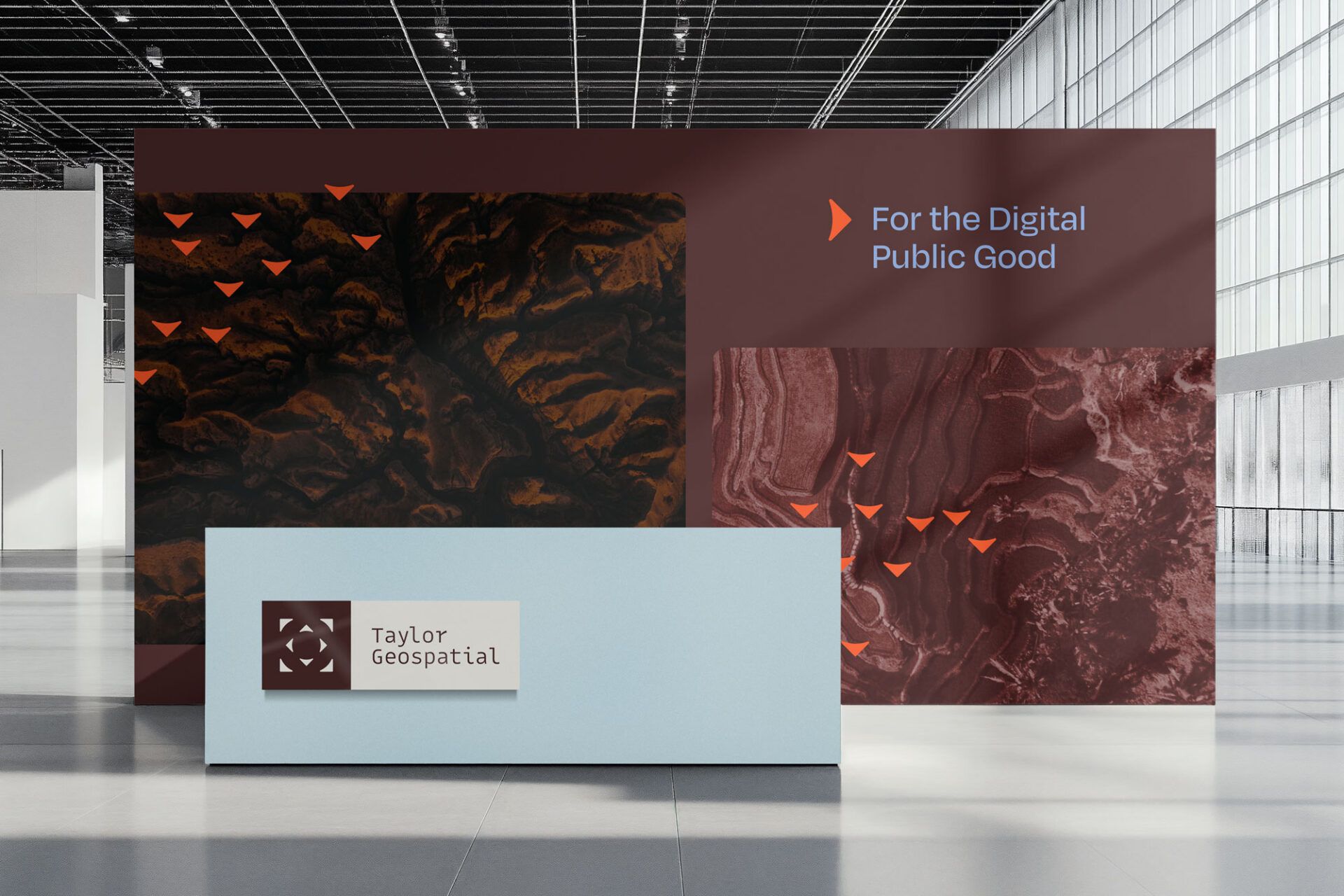
Taylor Geospatial brought in the Sprehe team to translate the organization’s purpose and vision into a brand that could deliver on the new tagline, “For the Digital Public Good.”
A Mechanism; Not Just A Mark
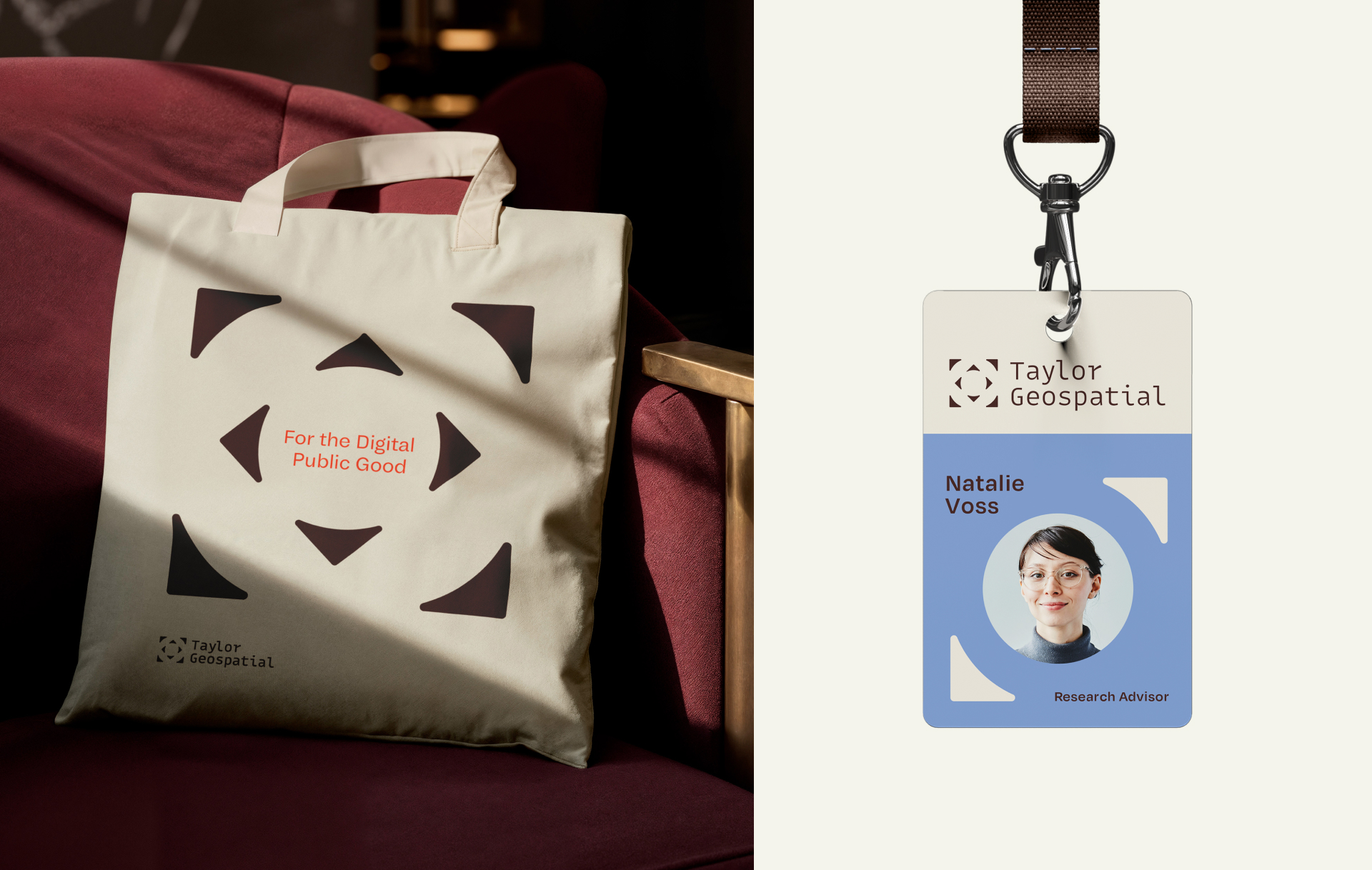
The brandmark is built around a central idea: unlocking. The interior space represents where the work happens — the research, the collaboration, the science. The outer frame is where that work gets released into the world and put to use.